Theatre, cave room or tablao
Flamenco show in Granada
How a theatre show compares with a cave room or a tablao evening in Granada, what you hear and see, and how to choose in three questions.
Reserve your seat ↗Quick answer
A flamenco show in Granada comes in three main formats: a theatre with rows of seats and a stage, a small cave room cut into the hillside, and a tablao, a bar-style room that often serves drinks or a meal. A theatre suits first-timers who want a clear view and good sound; a cave room suits people who want to sit close; a tablao with dinner suits a whole evening out.
One art form, several kinds of room
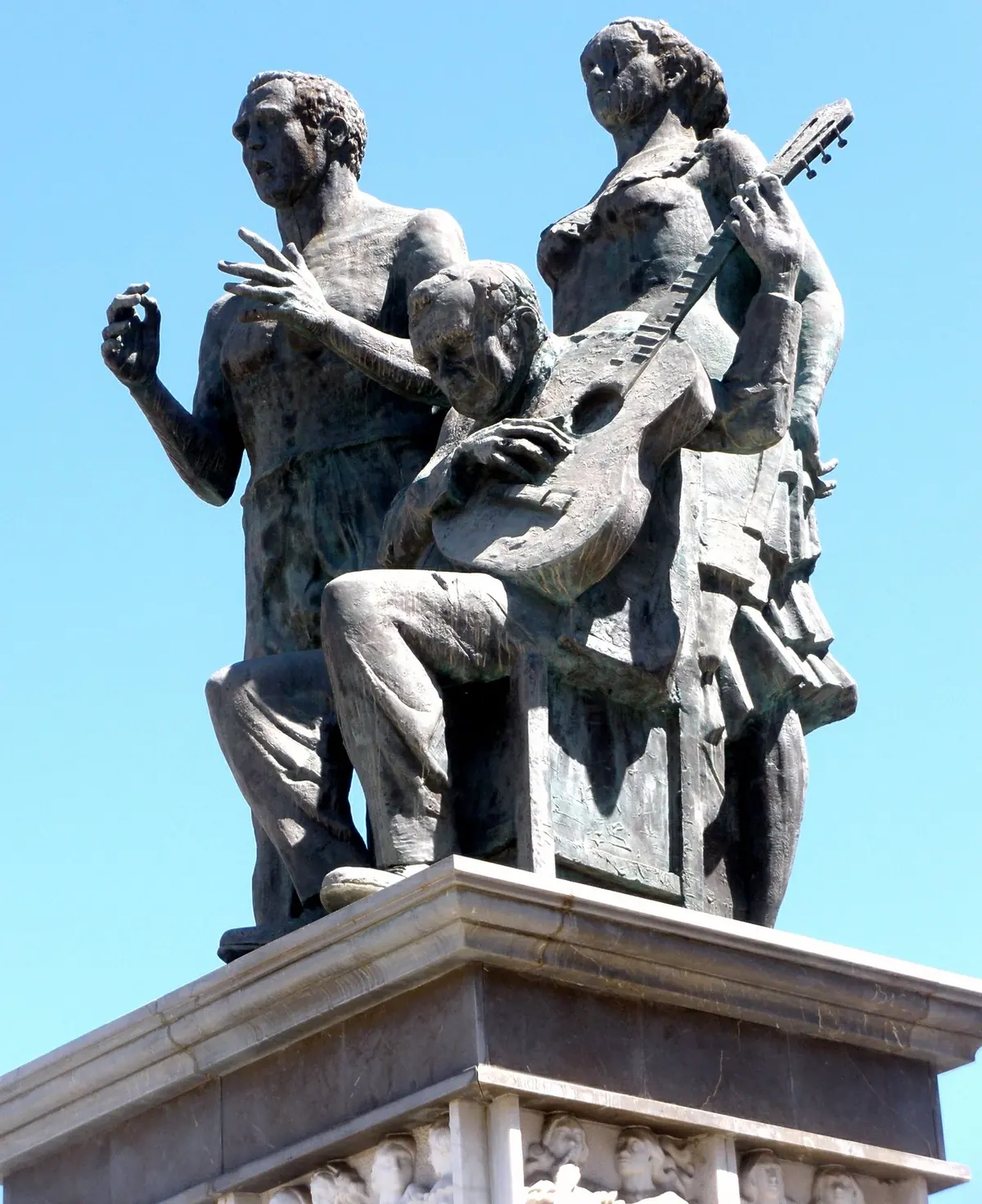
Flamenco joins song, dance and guitar, and UNESCO, which put it on its intangible heritage list in 2010, calls Andalusia its heartland. Granada has a flamenco monument of its own on the Paseo del Violón. What changes from one evening to the next is mostly the room. The same palos can be played in a theatre, a cave, a restaurant or a bar, and the room decides how close you sit, how loud it feels and whether food is part of the night. Choosing the room is therefore the real booking decision, and it is worth making before you compare prices or dates.
Where flamenco comes from
UNESCO places flamenco's roots in Andalusia, with ties to Murcia and Extremadura, and adds that Gitano communities helped shape it more than anyone. Wikipedia names Jerez de la Frontera as the place of the earliest written trace of the art, in the late 18th century, and links individual forms to Cádiz, Ronda and Málaga. Granada added its own forms, such as the granaína, and in 1922 hosted a contest about what deep song should be, which is why a Granada evening feels local even though the art is shared across the south. Knowing this helps you see a show as part of a long tradition, not a one-off performance.
The theatre format
In a theatre you sit in seats facing a stage, with the artists lit and the sound set up for the room. That is the setup at Teatro Flamenco Granada on Campo del Príncipe: sixty minutes with dancers, singers and guitarists. The appeal is a clear view and a predictable evening. The cost is distance. You watch the artists from your seat rather than from an arm's length away, and nothing is served at the table other than the drink some tickets include. For many first-time visitors that distance is a benefit, not a drawback, because you can take in the whole stage at once.
Read next: Teatro Flamenco Granada tickets
The cave room
Granada's hillside cave houses are the best-known alternative. A cave room is a small space cut into the hillside, and the artists perform a few steps from the front row. Wikipedia's article on the tablao notes that Granada's cave rooms are known for zambras. If you want to feel the footwork and hear the guitar at close quarters, a cave suits you better than a theatre. Expect narrow streets on the way, and check the booking page for the arrival advice, since taxis and buses are often recommended over driving. A cave also tends to be a shorter, lighter evening than one built around dinner. Ask which route the venue recommends when you book.
The tablao, with or without dinner
A tablao is a venue for flamenco shows, and the word comes from tablado, the wooden platform the dancer stands on. Wikipedia dates the rise of tablaos across Spain to the 1960s, when they took over from the cafés cantantes, and notes that many serve drinks, some offer tapas and some a full meal. Some Granada venues pair dinner with the show, which turns it into a long evening. That is a different purchase from a one-hour theatre ticket, so compare the whole evening and not only the show: the meal, the drinks, the length and where you sit.
What you will hear
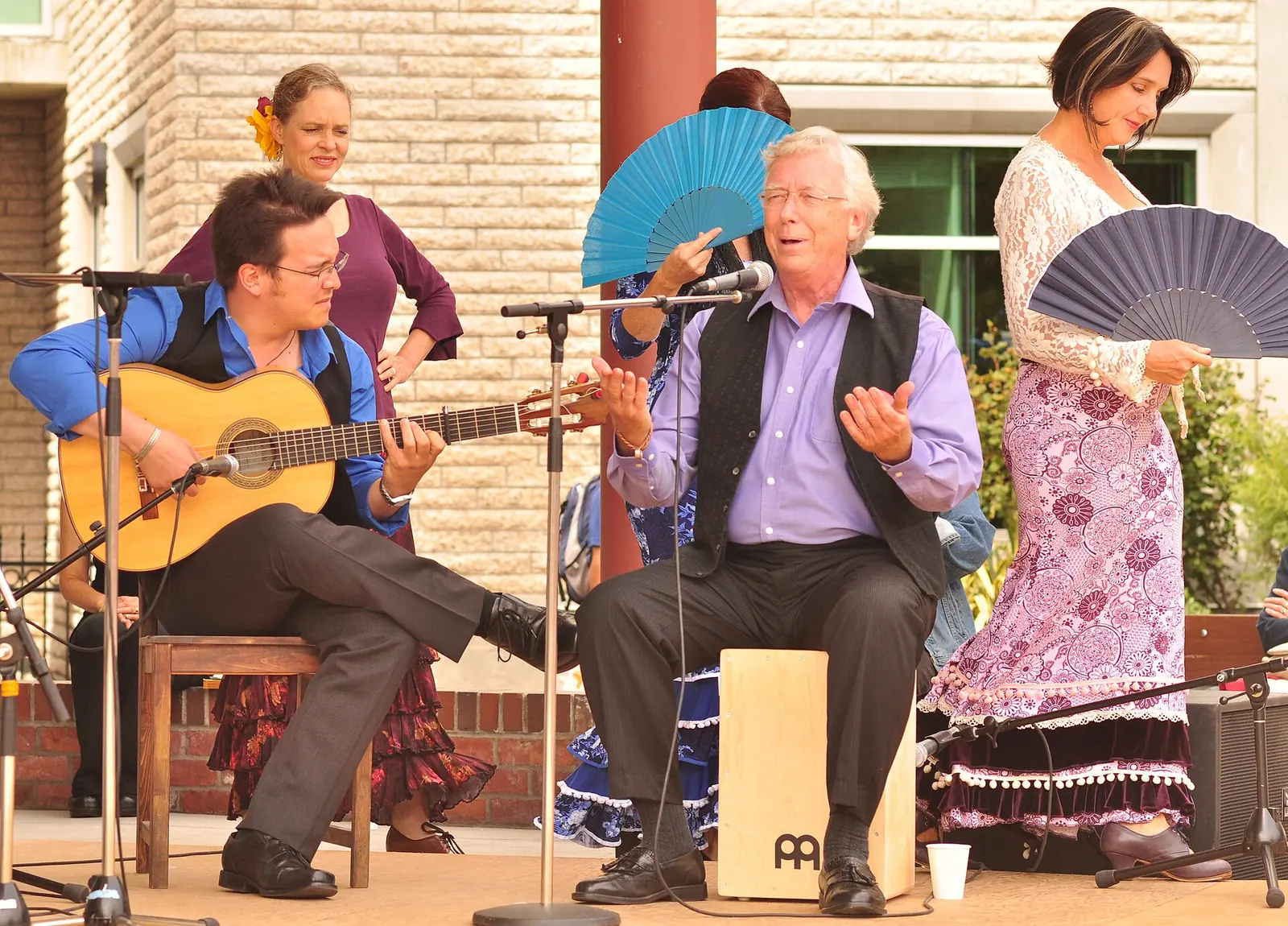
Palos are the named flamenco forms, and Wikipedia puts their number above fifty. The tangos use a four-beat cycle, while the soleá family runs on twelve beats. Granada has its own style within the tangos, played slower, and the granaína, a slow variant of the Granada fandango, takes its name from the city. A show rarely announces the palo it is playing. Listen for the cycle of the clapping and the way the dancer's feet answer the guitar, and let the artists carry you through the forms. It is the clapping and the footwork, more than any single melody, that tells you where a piece is going.
Read next: How to watch flamenco
Why Granada has a flamenco story of its own
In June 1922 Granada held the Concurso de Cante Jondo, a contest to revive deep song, promoted by the composer Falla and the poet Lorca. It was held in the grounds of the Alhambra. The contest did not restore flamenco to a purer form, as its organisers hoped, but it raised the art's standing and is still how Granada's link with flamenco is told. Falla lived in the city from 1921 to 1939, and Lorca began writing his Poema del cante jondo in 1921.
Read next: Flamenco, Lorca and Falla
Choosing in three questions
Ask yourself three things and the choice usually settles itself. The answers depend on what you want from the night, not on which room has the better reputation, because all three formats show the same art. If two answers pull in different directions, give more weight to the one about time, since a one-hour show and a three-hour dinner shape the rest of your day very differently.
- Do you want a clear view and a fixed hour, with no meal attached? Pick a theatre.
- Do you want to sit within arm's reach of the artists in a small room? Pick a cave room.
- Do you want dinner and the show as one long evening? Pick a tablao with a meal.
Checks before you book any show
Whatever the format, read these items on the booking page before you pay. They decide whether the evening is the one you pictured, and they are easy to miss when you are comparing several tickets at once. Open two booking pages side by side and tick each item for both, so that the differences stand out. Open two booking pages side by side and tick each item for both, so that the differences stand out before you pay.
- How long the show runs, and whether a meal comes before it.
- Whether a drink is included, and for which ticket type.
- Where each ticket sits, and whether any area is up stairs.
- The free-cancellation window, and whether you can pay later.
- How to reach the venue, and what the arrival advice says.
- Whether the booking page shows the language and currency you want.
Who this isn't for
Skip the theatre if you are after the smallest, closest room in Granada, or if you want dinner served while the artists perform. It also suits nobody who wants to drift in and out, because the show is a seated hour with a fixed start. If that describes you, look at cave-room tickets or a tablao with a meal, and book whichever format you choose for a date that fits the rest of your Granada plans, with a free-cancellation window you can live with.
Frequently asked questions
Is a theatre show less true to flamenco than a cave?
No. It is a different format. The palos, the singing, the dance and the guitar are the same art. A theatre gives you a clear view and an even sound, and a cave gives you closeness.
How long does a flamenco show in Granada last?
Teatro Flamenco Granada's show lasts an hour. Other formats vary, so check the length on each booking page.
Is Spanish needed to follow the show?
No. The dance and the guitar carry most of the meaning, and the lyrics are short. You are not expected to follow the lyrics.
What is a tablao?
A venue for flamenco shows, and also the wooden platform a dancer stands on. Tablaos often serve drinks, and some serve tapas or a meal.
When is the best time to book?
Book once you know your dates. The GetYourGuide ticket is refundable up to the 24-hour mark, so fix a date now and change it if plans move.
Which format is best for a first show?
A theatre is the easiest first show: a fixed hour, a clear view and an even sound. Choose a cave room later if you want to sit closer.
Sources